Start to Finish
21 June 2026 --- Ralph
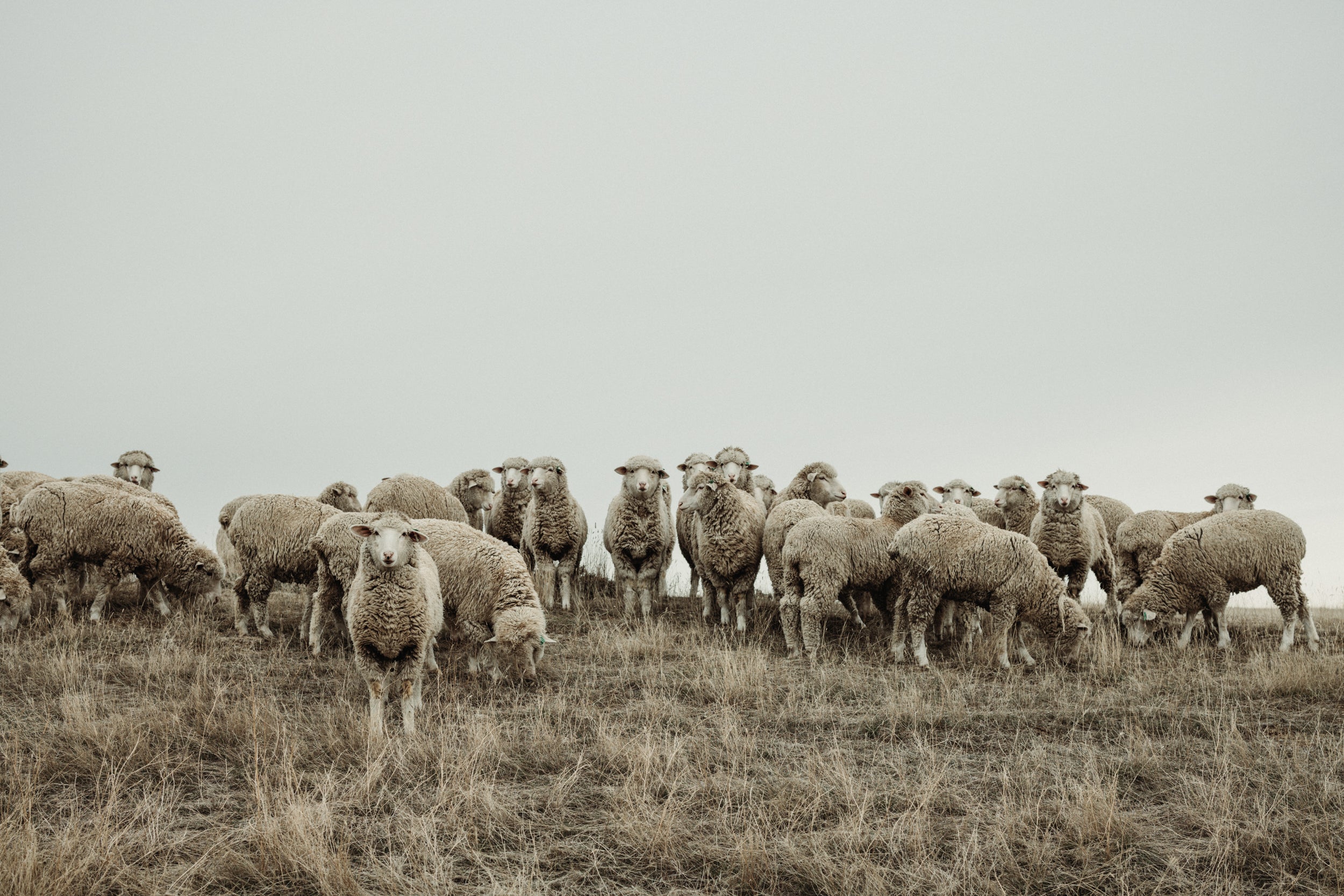
How long does it take to make a WeatherWool garment, from start to finish? A year to a year-and-a-half is best-case. For Batch Innes-1 (Batch 11), it will be about 3.5 years in total. But that's just the WeatherWool part. The Ranchers start their work years before we do!
This page presents the main steps and the timeline. A separate page, How WeatherWool is Made, details each of these steps and many others, and introduces the many companies and professionals that help in the process.
- In Spring of each year our Ranchers examine the performance records of each ewe and determine which ram will be a suitable sire for her next lambs. This process begins in June. Click for some photos and discussion of these events on PM Ranch in Minnesota in 2018.
- Nearly a year later, in late April or May (on PM Ranch), lambs are born. [Let's say 1 year has passed.]
- When the lambs are almost one year old, they are shorn for the first time. Normally, the wool grown in a sheep's first year is finer (thinner) than the wool grown later in life, and so ewes that have been bred for us often do not produce fiber we can use at their first shearing. But we do sometimes buy lamb's wool. [Two years have passed.]
- When the grown lamb is a 2-year old ewe, it is shorn again, and this will usually be the first time it will produce fiber that we can use. [Three years have passed.]
- A few things have to happen before we actually can take possession of the wool. The fleece must be:
- baled
- transported (mostly) to the Rancher's cooperative warehouse in Gillette, Wyoming
- greasy (raw) wool is then sampled for testing ...
- samples sent to the lab. The testing is done at the New Zealand Wool Testing Authority because the USA's only lab that did all the tests we need closed in 2019. The University of Texas did some testing for us as of 2023, but the "length and strength" testing we require is not available in the USA. Most American buyers don't need L&S data
- Test results returned to the ranchers, brokers (perhaps) and to us. We have a login at NZWTA, so we can see online all the results for the batches we are considering for purchase
- Most of our fiber is purchased directly from our rancher by private treaty, but sometimes we buy at sealed-bid auction
All told, easily two years from when we start spending money (buying wool from ranchers) until we have a garment completed for a customer. And that does not count the Rancher's timeline.
The scouring plant, the dyers, the tailors, the spinners, the weavers, the finishers … all of these pros are serving many other customers and so we may need to wait weeks or more before they are ready to work on WeatherWool. Or there may be personnel or equipment problems that cause delays. Much of the garment industry shuts down for a week or two in July.
The timeline also does not include potential supply-chain bottlenecks. Because some of our supplies, such as zippers and thread and buttons may have a lead time of months, we need to keep large surpluses on hand in order to be sure our operations are not held up.
Our Ranchers will begin working on WeatherWool more than three years before they actually get paid. And WeatherWool will be out of pocket for two years plus before we have finished garments.
This sounds like (and certainly FEELS like!) a very long time to me, but I don't have any other frame of reference.
As WeatherWool grows, we will be working more and more closely with our Ranchers and all our Partners and doing whatever we can to speed things.
There are still other significant wrinkles in the production. Sometimes the weavers or knitters won't like the cones on which yarn has been delivered ... won't feed through their machines smoothly. Reconing yarns can take significant time! (And not free, either.) Also, because our warp and weft yarns (warp runs lengthwise, weft runs horizontal) are mostly spun differently, and because we use a few different colors, it's almost a certainty that when the weaving is done, we'll have some warp or some weft left over. That's not a delay, but it is a big deal! It's expensive stuff, and we need to figure out what to do with it. The leftover yarns may not be used for yet another year or two.
THANKS to Advisor Bob Padula for the Rancher-section of the timeline.