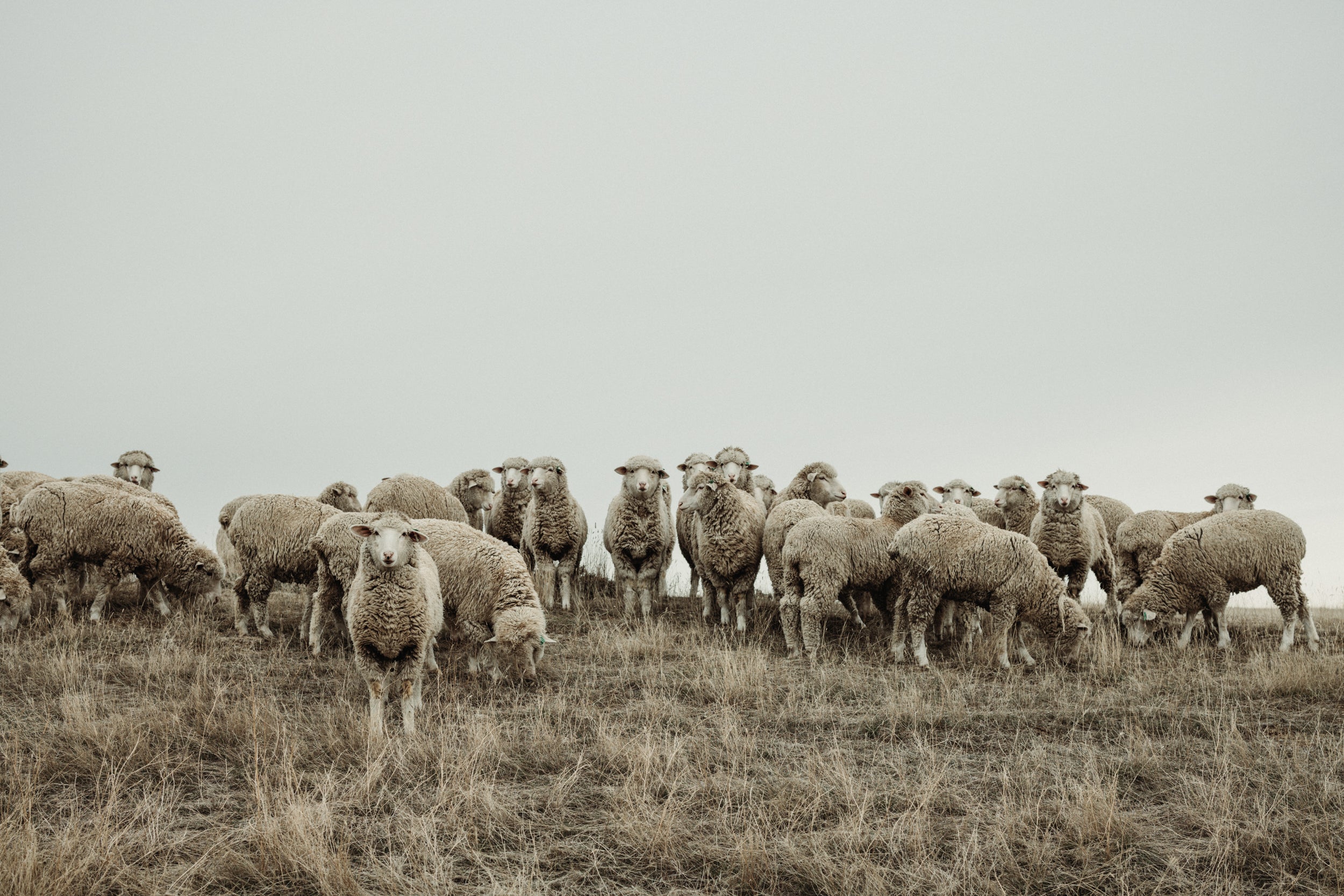
Combing
I created this page in August of 2023, and wrote this para:
It's a little bit crazy for us to be combing our own fiber, but we've been running down crazy-road for a while, and custom-combing can eliminate a couple of things that have been bothering me. It's not at all clear it will be worth the trouble, but we are going to find out!
YEAH, we found out all right. It's VERY WORTH THE TROUBLE. But I wouldn't exactly call it TROUBLE ... EFFORT and EXPENSE are more appropriate. Batch 9, first rolls Fabric were Natural White in FullWeight, MidWeight and Denim, of June, 2023, told us production Fabric in 2023 (which included the first Denim), was our first batch made fully from top, and from our own top!
Background:
- After wool is scoured, it can be combed into TOP, also called WOOL TOP or OPEN TOP
- Whether the clean fiber is combed depends upon a few things ... basically, it depends on the ultimate product intended. Of course, the extra processing increases costs. It also decreases yield
- But the bottom line is that using top makes a better product, and we always go with BETTER
- TOP is better for us because:
- Noils (short fibers that reduce the strength of the yarn) are removed
- Neps (tangles of fibers), which cause lumps and irregularities in the yarn are removed
- Vegetable matter (bits of grass, weeds, seeds) is removed. Scouring does not remove vegetable matter. Without coming, it is necessary to CARBONIZE to remove the "VM". Carbonizing is turning the VM to black carbon dust via a bath in hot sulfuric acid. The fabric is then dried, baked and physically agitated to remove the carbon ... then the acid is neutralized in an alkaline bath
- Worsted spinning requires top and we want to be able to make our worsted yarns from the fiber we buy from our ranchers
TOP is more expensive than "clean fiber", which is the result of the initial scouring process. And it is extremely unusual to use top for woolen yarn.
NOTE: "woolen yarn" does not mean yarn made of wool. It means "woolen-spun" yarn, which is a fat and fuzzy yarn. Confusing nomenclature for sure. Worsted yarn, or, worsted-spun yarn (sometimes pronounced WOOSTERED) is skinny and slick, very different from woolen-yarn. Worsted can only be spun from top.

The difference in texture of woolen-spun and worsted-spun yarns
Sooooooo .... beginning with Batch 9, when we began working exclusively with top, we eliminate don't have to worry about neps, noils, VM, carbonizing, or separate purchase of our warp yarn.
BUT ... the difficulty of working exclusively from top combed from fiber sourced from our own ranchers is that we must deal in minimum quantities of 40,000 pounds (18,180 kg). The mill will not do "custom combing" for smaller quantities of greasy. And 40,000 pounds is a lot of greasy and costs a lot of money. We don't work with any ranches that grow 40,000 pounds per year. However, the Geis and Innes Ranches in Wyoming produce in the neighborhood of 20,000 pounds annually. So, for these two Ranches, if we combine the clips from two years, we can reach the magical 40,000 pound mark and make single-source Fabric entirely from combed top. All our woolen yarn and all our worsted yarn can be made from a single batch (two-years clip) of Innes or Geis.
Of course, this means, for example, buying the first half of Geis-1 in 2026 and storing it until Geis 2027 is available ... and then storing both clips until Chargeurs is ready to begin processing.
PAGE CREATED: 18 August 2023 --- Ralph
UPDATED 28 September 2026 --- SunDog